
The Science of
Warmth, Light, and Recovery
At The Light Lounge
our approach is built around
a simple idea.
The body responds to:
Warmth

Light
Rest
Our wellness experience pods are designed to
support relaxation, recovery, and overall well-being by
Bio-stacking.
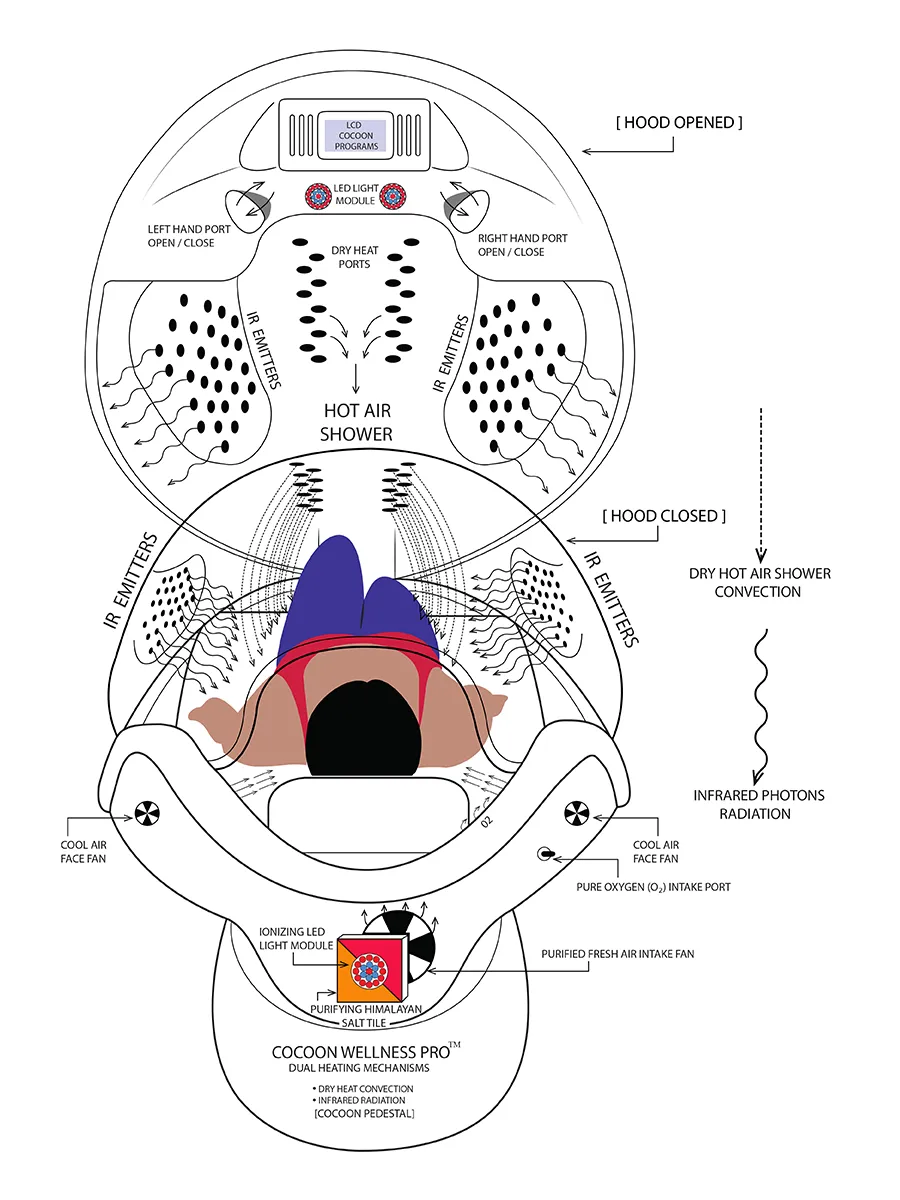
Combining
An Ergonomic bed
Red and near-infrared light
(630-850nm)
Detoxing dry heat sauna
Vibration massage plates
Chromotherapy ambient light
Himalayan salt tile ionized air flow used in cooling face fan
= Reset and Recovery.
Science Snapshot
Photobiomodulation is being studied for its effects on cellular energy, inflammation, and tissue repair.
Passive heat is associated with relaxation, circulation, and recovery support.
Integrated full body vibrating massage feature to support relaxation, circulation, mobility and exercise recovery.
What Is Photobiomodulation?
Photobiomodulation (PBM), often called Red Light Therapy, uses visible red and near-infrared light to influence biological activity without heating or damaging tissue.
Research describes it as a non-thermal light therapy that can affect cellular signaling, mitochondrial function, and tissue repair processes.
Science Snapshot
Photobiomodulation works by interacting with cellular photoreceptors, especially in the mitochondria, where it may support ATP, reduces oxidative stress and inflammation-related pathways.
Those mechanisms are one reason red and near-infrared light are being studied in relation to pain relief, healing, and recovery.
Why Wavelength Matters
Different wavelengths interact
with the body differently.
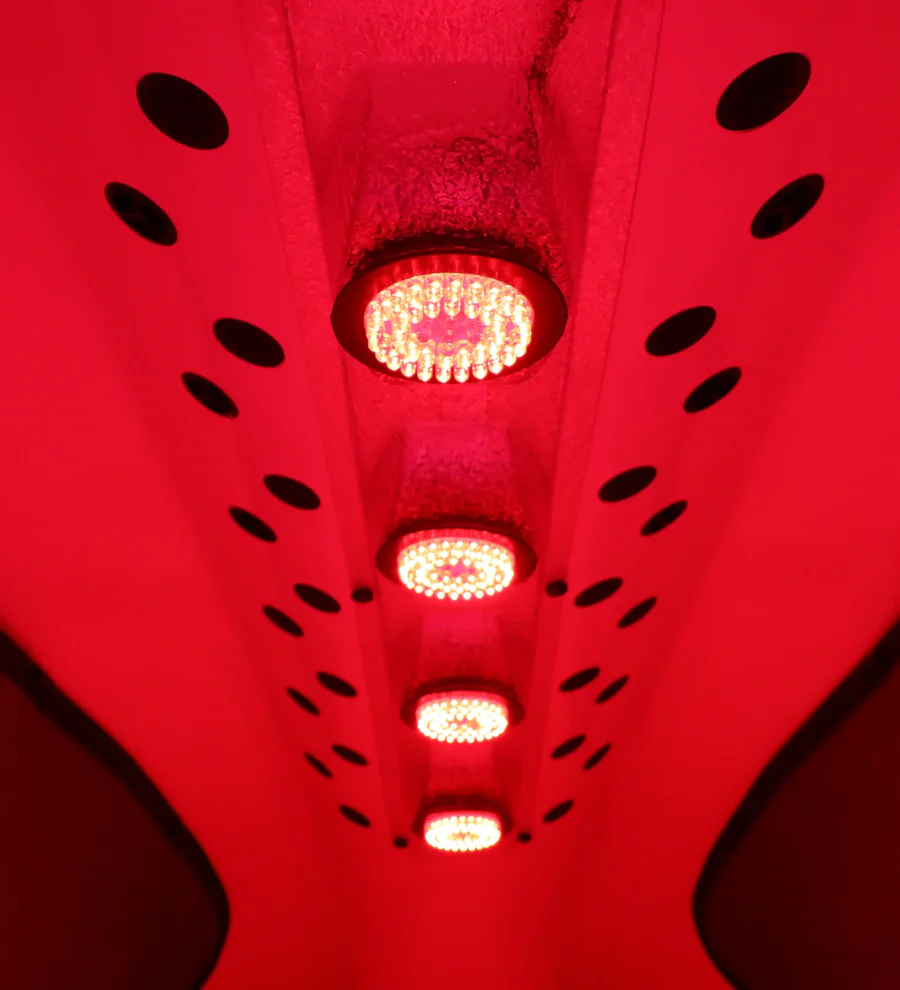
630 nm Red Light
Light in the 630 nm range is generally associated with more superficial tissues, especially the skin. In photobiomodulation research, red light in this range is often discussed in relation to skin quality, collagen support, and surface-level tissue response.
850 nm Near-Infrared Light
Near-infrared light around 850 nm penetrates more deeply than visible red light and is more often discussed in relation to muscles, joints, and deeper tissues. This is why near-infrared wavelengths are commonly used in recovery and pain-related PBM applications.
Science Snapshot
Why Wavelength Matters
630 nm is commonly linked with skin-level effects.
850 nm near-infrared is associated with deeper tissues, including muscles and joints.
Cellular Energy and Tissue Recovery
One of the best-known theories behind PBM is that it may support mitochondrial activity. Mitochondria produce ATP (Adenosine Triphosphate) the energy currency of the cell, and PBM research suggests that red and near-infrared light can influence this process while also modulating oxidative stress and inflammatory signaling.
This is why PBM is often discussed in connection with:
Tissue repair
Recovery support
Pain modulation
Inflammation balance
Skin renewal
Supporting the body’s recovery and repair processes
at a cellular level.
The Role of Warmth and Passive Heat
Passive heat therapies like saunas are widely associated with relaxation and recovery.
Reviews of heat therapy note effects on circulation, vascular response, and overall restorative experience, while sauna traditions have long been used for physical and mental relaxation.
For many people, warmth does more than feel comforting. It helps create the conditions for slowing down, releasing tension, and shifting toward a more restorative state. That is especially meaningful in a fast-paced world and in colder climates, like Calgary, where many people spend much of the year inside, under artificial lighting, physically braced from stress, and under-recovered from activity.
Why Light and Warmth Matter in
Northern Climates
In Northern Climates,
long winters
and reduced daylight
can affect circadian rhythm,
sleep timing, and mood.

The National Institute of Mental Health notes that seasonal affective disorder (SAD) is tied to seasonal light changes, and light-based approaches are commonly used to support people affected by darker months.
At The Light Lounge, we do not position red light therapy as a replacement for daylight.
Instead, we recognize that in darker climates, intentional experiences of light, warmth, calm, and recovery can become an important part of maintaining a healthier rhythm of rest and restoration.
Creating intentional rituals around warmth, light, and resEt
can help support well-being during darker seasons.
Vibration Massage
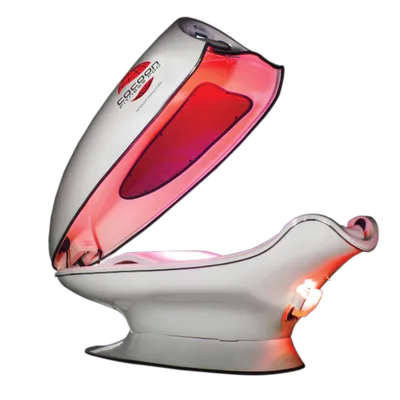
Vibration massage in the Cocoon Wellness Pod uses gentle rhythmic movement to create a soothing sensory experience for the body.
This mechanical stimulation may help encourage circulation, ease feelings of muscular tension, support mobility, and promote relaxation.
Research on vibration therapy suggests that rhythmic vibration can stimulate sensory receptors, influence neuromuscular activity, and help modulate the body’s perception of discomfort.
When paired with warmth, stillness, and a private environment, the experience may help the body shift into a calmer, more restorative state.
What Makes the Light Lounge Experience Different
The Cocoon Deluxe
Wellness Pod
is a multi-sensory
bio-stacking
wellness system
that combines:
The Cocoon Deluxe Wellness Pod is a multi-sensory
bio-stacking wellness system
that combines:
Light to support a recovery-focused environment
Warmth to encourage ease and passive recovery
Vibration for comfort and muscle relaxation
Sensory elements that help the body settle
What sets this apart is the layering of multiple wellness modalities
into one private experience
=
Bio-stacking
Bio-stacking creates
a simple, repeatable wellness ritual
that supports recovery, relaxation, and well-being
in a comfortable and approachable format.
Ready to Start your
Ritual of Recovery?
References
American Society for Laser Medicine and Surgery. (n.d.). Photobiomodulation. Retrieved June 8, 2026, from https://www.aslms.org/for-the-public/treatments-using-lasers-and-energy-based-devices/photobiomodulation
Brunt, V. E., & Minson, C. T. (2021). Heat therapy: Mechanistic underpinnings and applications to cardiovascular health. Journal of Applied Physiology, 130(6), 1684–1704. https://doi.org/10.1152/japplphysiol.00141.2020
Casale, R., & Hansson, P. (2022). The analgesic effect of localized vibration: a systematic review. Part 1: the neurophysiological basis. European journal of physical and rehabilitation medicine, 58(2), 306–315. https://doi.org/10.23736/S1973-9087.22.07415-9
Dompe, C., Moncrieff, L., Matys, J., Grzech-Leśniak, K., Kocherova, I., Bryja, A., Bruska, M., Dominiak, M., Mozdziak, P., Skiba, T. H. I., Shibli, J. A., Angelova Volponi, A., Kempisty, B., & Dyszkiewicz-Konwińska, M. (2020). Photobiomodulation—Underlying mechanism and clinical applications. Journal of Clinical Medicine, 9(6), 1724. https://doi.org/10.3390/jcm9061724
Laukkanen, J. A., & Kunutsor, S. K. (2024). The multifaceted benefits of passive heat therapies for extending the healthspan: A comprehensive review with a focus on Finnish sauna. Temperature, 11(1), 27–51. https://doi.org/10.1080/23328940.2023.2300623
Lewy, A. J., Bauer, V. K., Cutler, N. L., Sack, R. L., Ahmed, S., Thomas, K. H., Blood, M. L., & Latham Jackson, J. M. (1998). Morning vs evening light treatment of patients with winter depression. Archives of General Psychiatry, 55(10), 890–896. https://doi.org/10.1001/archpsyc.55.10.890
National Institute of Mental Health. (n.d.). Seasonal affective disorder. Retrieved June 8, 2026, from https://www.nimh.nih.gov/health/publications/seasonal-affective-disorder
Wellness USA. (n.d.). Cocoon Wellness POD™. Retrieved June 8, 2026, from https://wellness-usa.com/products/cocoon-wellness-pod
The Light Lounge Ltd. services are intended for general wellness, relaxation, and recovery support.
It is not a medical treatment and should not be used to diagnose, treat, or cure any health condition.
Copyrights 2026 | The Light Lounge Ltd. ™